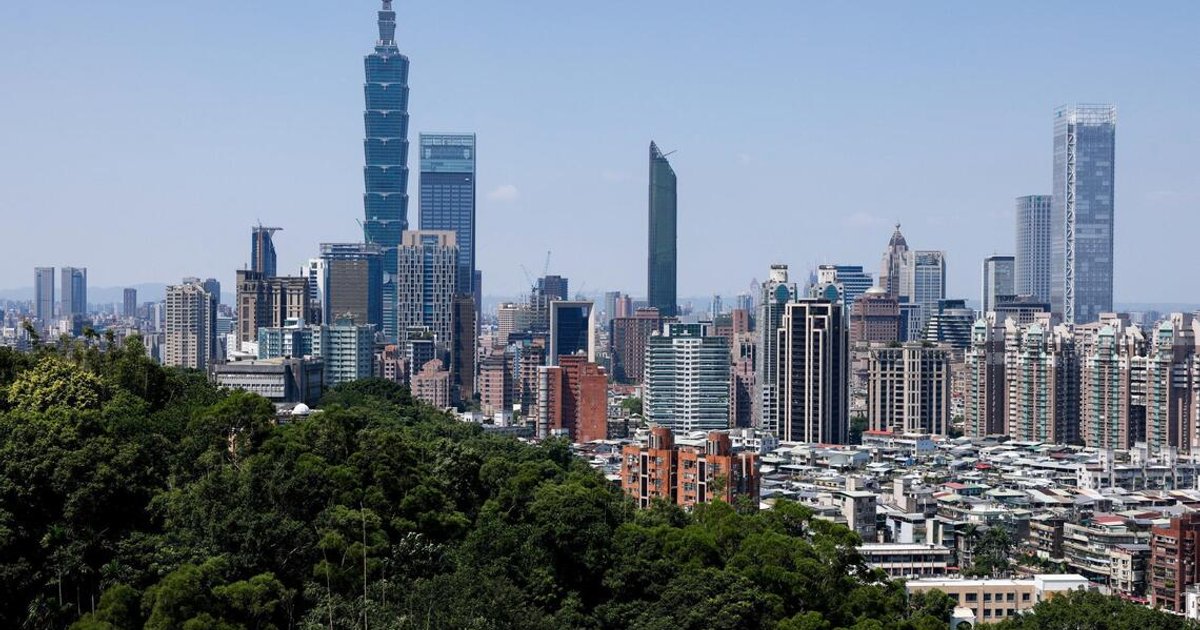
Taiwan reported its fourth consecutive quarter of double-digit economic growth, marking the island nation’s longest stretch of expansion in nearly 39 years. According to a statement released by the statistics bureau in Taipei, gross domestic product expanded by 14.36% in the third quarter compared to a year earlier, beating the median 12% growth estimate predicted by economists.
The extraordinary boom stems directly from global investment in artificial intelligence. Home to crucial hardware fabricators for technology giants such as Nvidia and Apple, Taiwan has positioned itself as the primary hardware foundation of the worldwide AI rollout. The island's exports surged almost 61% to a record of over US$87 billion in a single month, while Taiwan Semiconductor Manufacturing Company (TSMC), the world's largest contract chipmaker, posted a 69% profit jump for the third quarter alongside elevated revenue forecasts.
This rapid expansion has dramatically strengthened Taiwan's fiscal capacity. The Cabinet proposed a record NT$3.93 trillion spending plan, expanding budget room for key national priorities—including raising overall military spending to over 3% of GDP.
The K-Shaped Divide: High Tech vs. Everyday Wages
Despite the remarkable macroeconomic metrics and stock market high points, public reaction reveals a stark divergence between corporate profits and everyday living conditions. The rapid rise of the technology sector has fueled debates over income inequality, real estate affordability, and an increasingly unequal labor market.
"I'm from Taiwan, where tech industry workers are the ones making a fortune. Out of Taiwan's 7 million workers, only 1 million can get jobs in the tech sector; the rest are shut out of businesses," noted one resident analyzing the labor dynamics. "As a result, the remaining workers are left earning a paltry $1300 a month, while housing prices in Taiwan are $500,000. Taiwan's low birth rate proves its distorted economic structure."
While high-tech personnel command annual compensation packages ranging from $100,000 to $200,000, workers in traditional manufacturing, retail, and service sectors face stagnant wage growth amid persistent global inflation. Concerns have also been raised over domestic monetary policy, where low interest rates maintained to preserve export competitiveness have simultaneously elevated domestic consumer costs and home prices.
Financial Markets and Public Participation
Unlike traditional natural-resource booms, Taiwan's economic expansion relies heavily on advanced manufacturing and human capital. While equity indexes have broken local records, community responses highlight how domestic retail investors attempt to participate in the growth.
Over 60% of the Taiwanese population holds active stock trading accounts, with Exchange-Traded Funds (ETFs) accumulating a market capitalization equivalent to nearly 30% of national GDP. For many household savers, retail investment has become the primary mechanism to bridge the gap between fixed wages and broader corporate revenues.
"Until the benefits of AI growth start spilling over into other industries, investing in the stock market is simply the most direct way for people to allocate their assets," observed one commenter on the trend. "Workers in other industries simply can’t compete with that level of income right now."
Beyond individual electronics suppliers, the broader ecosystem includes major global manufacturers like Foxconn, Delta Electronics, Wistron, Quanta, MediaTek, and ASE—all reporting peak operational volumes. However, whether this elevated expansion can translate into long-term structural benefits, higher fertility rates, and balanced wage growth across non-tech industries remains the central challenge facing policymakers in Taipei.

